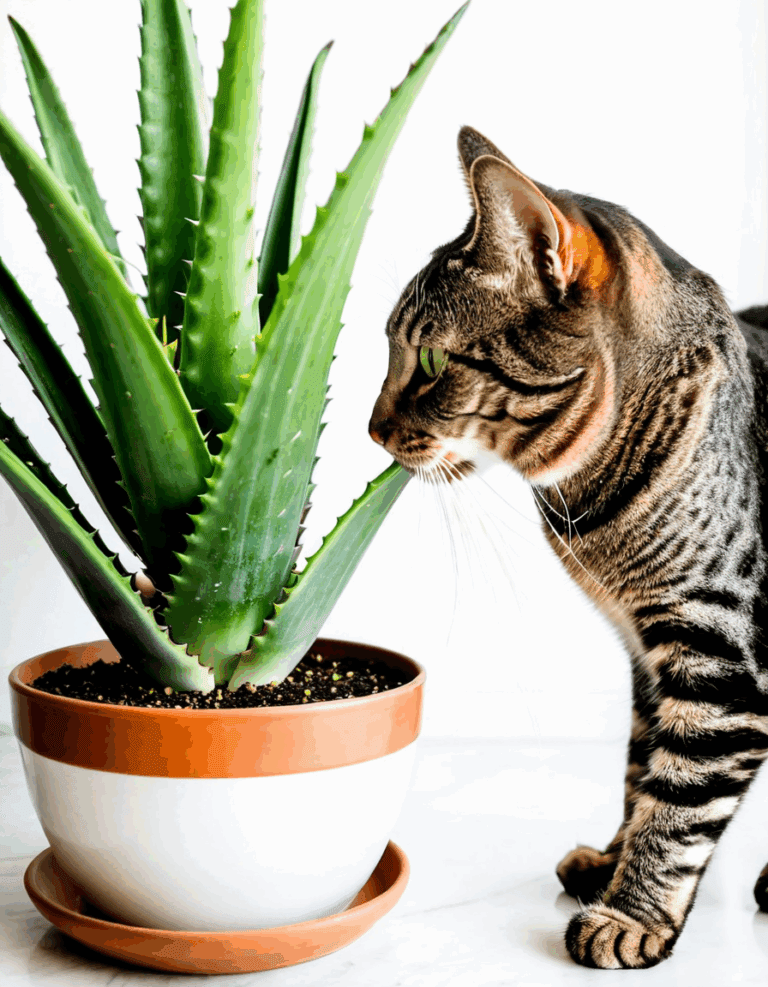
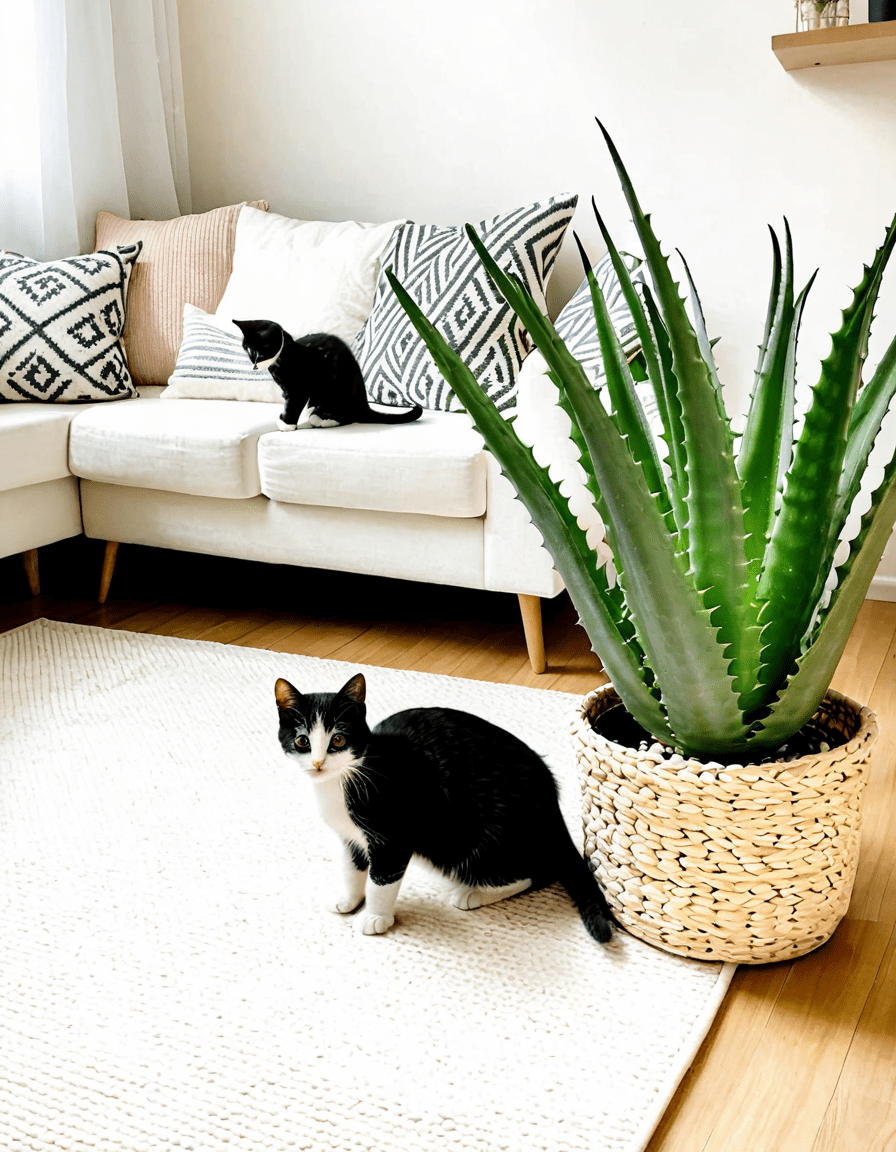
When it comes to houseplants, one question often arises: is aloe vera safe for cats? This popular succulent is known for its healing benefits for humans but poses a hidden risk for our feline friends. Let’s explore the effects of aloe vera on cats and examine how this plant fits into the safety landscape of common household greenery.
Understanding Aloe Vera and Its Effects on Cats

Aloe vera is renowned for its soothing properties, often found in ointments and cosmetics. For us humans, it’s a go-to treatment for burns or skin irritations. However, the same can’t be said for cats. Research indicates that aloe vera contains saponins and anthraquinones, which are toxic to felines. If a curious cat decides to nibble on its fleshy leaves, it may face serious consequences. Symptoms of aloe vera poisoning in cats can include:

As a responsible cat owner, it’s essential to keep this in mind and ensure your home is a safe haven for your pets.
Top 5 Common Plants: Is Aloe Vera Safe for Cats in Comparison?
To fully grasp the risk aloe vera poses, let’s compare it with some other household plants often queried for their safety.
By comparing aloe vera with these plants, we can understand why it’s crucial to question its safety for cats.
The Hidden Risks of Aloe Vera: What Pet Owners Should Know
Despite its popularity, aloe vera’s accessibility in many households does not make it safe for cats. A simple mistake can lead to serious health issues. Here are some hidden dangers associated with this plant:
Practical Safety Measures for Pet Owners
Here are some simple, yet effective steps you can take to protect your feline from the dangers of aloe vera and other harmful plants:
What to Plant Instead: Safe Alternatives for Cat Owners
If you’re looking to green up your living space without risking your furry friend’s health, here are a few cat-safe options:
The Bottom Line on Aloe Vera and Your Cat’s Safety
In conclusion, the question is aloe vera safe for cats? yields a definitive answer: no. While aloe vera provides numerous benefits for humans, it poses serious risks to our feline companions. Always prioritize your cat’s safety by avoiding toxic plants and opting for pet-friendly alternatives instead. By staying informed, you can create a welcoming and secure environment for your furry family members.
Enjoy your plants, and rest easy knowing you’ve taken the right steps to keep your pets safe! If you want to dive deeper into the world of pet care, check out more about caring for dog wounds or exploring whether Is lavender oil safe For Cats Remember, knowledge is key to being the best pet parent possible!
Is Aloe Vera Safe For Cats?
When pet owners think about adding greenery to their homes, aloe vera often comes to mind for its health benefits. But as we ponder, “is aloe vera safe for cats?”, we need to be mindful of its potential risks. Interestingly, while aloe vera is celebrated for its soothing properties for humans, it can be quite a different story for our feline friends. Most notably, the plant contains compounds called saponins and anthraquinones, which can lead to vomiting and diarrhea in cats. Think of it like when a beloved dog sustains an injury—knowing how to care For dog Wounds is crucial, but knowing which plants are safe for your furry family members can save you a lot of grief.
So, while our cats may not be chomping on the houseplants, they could still be exposed to the risks. Just as a horse kick can leave a mark, certain plants can have adverse effects unseen until it’s too late. Engaging in cat-friendly alternatives like cat grass or catnip can provide a safer way to indulge their curiosity. Plus, these options are just as easy to care for and can even perk up your pet’s mood without the worry that comes with wondering if aloe vera is safe for cats.
Now, here’s a fun fact: Did you know that the popular actor Zac Efron, when young, was quite the pet lover? His affinity for furry companions adds a charming layer to his persona. On the flip side, if you’ve ever seen Miyazaki Movies, you might notice how animals often play key roles, mirroring the strong bond we have with our pets—just like the bond we have with our cats. Plus, speaking of animal care, understanding issues like dog soft stool can help address digestive problems not just in canines but in all pets. So, whatever you do, keeping your space pet-friendly is key.
In conclusion, before bringing an aloe vera plant into your home, take a moment to weigh your options. Is aloe vera safe for cats? The answer leans toward caution. Just like choosing the right soccer mom outfit that’s functional yet stylish, selecting pet-safe plants can enhance your home without jeopardizing your furry companion’s well-being. So, stock your home with cat-friendly alternatives, and let your pets roam freely without the worry of tummy troubles or worse!