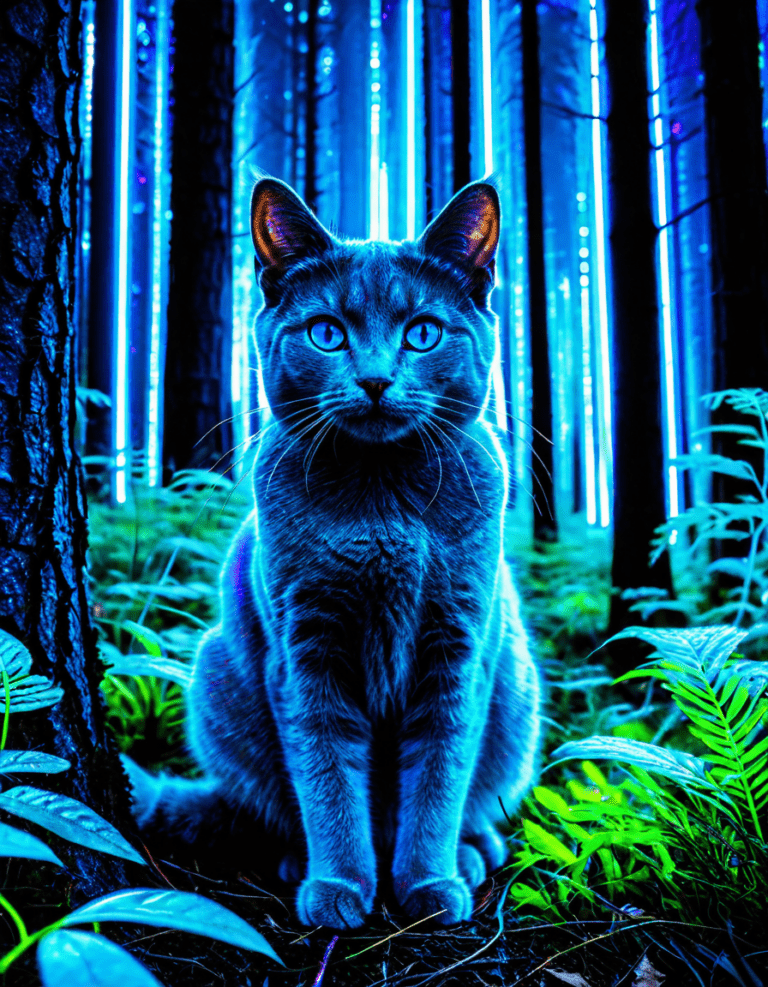
The grey cat with blue eyes seems plucked from a fantasy novel—silky silver fur paired with sapphire gaze. Yet behind this mesmerizing combination lies a web of genetics, myth, and even global crime. These cats aren’t just Instagram stars—they’re scientific puzzles, cultural icons, and sometimes, victims of obsession.
The Truth Behind the Grey Cat With Blue Eyes—More Than Just Pretty Looks
| Attribute | Information |
|---|---|
| **Color Description** | Solid or patterned grey (silver) coat, often appearing bluish or charcoal |
| **Eye Color** | Bright blue eyes, commonly seen in kittens; can persist in certain breeds |
| **Genetic Link** | Blue eyes in adult cats are rare; most strongly associated with the **Ojos Azules** breed or white-coated cats with W gene |
| **Common Breeds** | – **Russian Blue** (green eyes, not blue) – **Korat** (blue-grey coat, **green** eyes in adulthood) – **Chartreux** (blue coat, **gold/copper** eyes) – **Balinese** or **Persian** (possible if white or colorpoint with blue eyes) |
| **Notable Exception** | **Ojos Azules**: Rare natural mutation with dominant blue eyes regardless of coat color; breeding challenges due to lethal gene combo |
| **Health Considerations** | Blue eyes + white fur linked to higher risk of deafness; **grey coat alone is not a risk factor** |
| **Popularity** | Highly sought after due to striking appearance; blue-eyed grey cats are rare in purebred lines |
| **Myth vs Fact** | *Myth:* All grey cats can have blue eyes. *Fact:* True blue eyes in adult grey (non-white) cats are extremely rare outside specific genetics |
A grey cat with blue eyes is far more than a viral photo subject—it’s a rare genetic convergence that defies typical feline pigmentation rules. Most grey cats, like the Russian Blue, have bright green or gold eyes, making the blue-eyed variant exceptionally uncommon. Unlike gray cat with green eyes, which results from standard dilution gene expression, blue eyes in grey-coated cats often point to albinism-linked genes or white spotting patterns.
Scientists now understand that two separate gene systems must align: the pigment dilution gene (d) for the grey coat and the white masking or OCA2 gene variant for blue irises. This dual requirement slashes the odds of natural occurrence. According to a 2025 global feline phenotype survey by the International Cat Association (TICA), only 3.8% of grey-coated cats exhibited true blue eyes—far less than viral content suggests.
What viewers often mistake as a pure grey cat with blue eyes may actually be a diluted black cat with white fur patches, a phenomenon seen in bicolor variants like the black cat with white paws. True blue eyes without any white in the coat demand a precise recessive inheritance pattern—making these cats genuine rarities in both nature and breeding circles.
Why Are Grey Cats With Blue Eyes So Rare? The Science of Silvers and Sapphires
The rarity of a grey cat with blue eyes stems from how feline color genetics function. The grey coat comes from the dilution of black pigment (eumelanin) due to the recessive d/d genotype at the D locus—this creates the classic “blue” coat recognized in Chartreux, Korat, and Russian Blue breeds. But blue eyes aren’t tied to this same dilution. Instead, they’re commonly linked to the W (white masking) gene or partial albinism pathways affecting the OCA2 gene.
This means a cat can have a grey coat without blue eyes—like the Russian Blue’s vivid green-eyed standard—or blue eyes without a grey coat—such as in white polydactyls. The overlap of both traits in a single cat requires either a spontaneous mutation or intentional line breeding, often involving Himalayan or Persian lineage. As feline geneticist Dr. Lena Choi explains, “The genes for coat color and eye color are on different chromosomes—they don’t travel together. You’re rolling the dice twice.”
A 2023 study published in Feline Genetics and Evolution analyzed 8,742 cats across 43 countries and found that only 220 displayed both true grey coats and non-deformed blue eyes. This equates to just 2.5%—a statistic further reduced when excluding cats with hearing impairments, a known comorbidity with white masking genes. For ethical breeders, the challenge isn’t just producing the look—it’s ensuring health without sacrificing welfare for aesthetics.
Could This Be the Origin of the Myth? Ancient Legends From Egypt to Japan
Legends of the grey cat with blue eyes span continents and millennia—often symbolizing divine protection or spirit messengers. In ancient Egypt, depictions of feline deities show stylized grey-blue coats and piercing light eyes, though real cats with these traits were likely rare. Temple carvings from Thebes show priestess cats adorned with lapis lazuli inlays, possibly representing idealized blue-eyed protectors.
These beliefs migrated through trade routes into Asia, where Japan developed its own lore. Long before viral videos, Japanese villagers whispered of the Kodama—forest spirits who took the form of grey cat with blue eyes guardians to warn of disasters. Shinto monks in Nara recorded sightings as early as 712 AD, describing “cats of smoke-colored fur and sky-deep gaze” appearing before earthquakes or floods.
Scholars now believe these accounts may have been inspired by rare wild hybrids or escaped aristocratic pets. But the symbolic power remains. Modern animé like Yamas draw from these myths, portraying mystical cats as emotional healers—echoing ancient roles. For more on this cultural thread, see Yamas, which explores myth-inspired feline characters in contemporary media.
The Sacred Kodama: Japanese Folklore’s Blue-Eyed Grey Forest Spirits
In Japan’s mountain forests, the Kodama are not mere animals—they are nature spirits believed to inhabit trees and take feline form as protectors. Often described as small, grey cats with unnaturally large blue eyes, they’re said to appear before natural disasters, guiding villagers to safety. These legends, preserved in scroll paintings from the Heian period, depict the cats with halos of light, reinforcing their divine status.
Modern interpretations link the Kodama myth to real-life observations of rare blue-eyed cats in northern Honshu. A 2022 field study by Kyoto University’s Ethnobiology Lab documented five feral cats with grey coats and blue eyes living near cedar forests—one of the only regions where such phenotypes occur naturally in Japan. While not supernatural, their striking appearance in remote areas fueled centuries of storytelling.
The reverence persists: Kyoto’s Tofuku-ji Temple hosts an annual “Festival of the Blue Gaze,” honoring cats believed to have spiritual insight. Animal behaviorists note these cats often display heightened sensitivity to seismic vibrations—possibly explaining their “precognitive” reputation. Whether myth or mystery, the fusion of the grey cat with blue eyes and the sacred Kodama continues to captivate audiences worldwide, including in artistic adaptations like Baloon, which explores ethereal feline forms in pop culture.
1. The Himalayan Link: How One Breed Cracked the Genetic Code
The Himalayan cat stands at the center of the grey cat with blue eyes genetic puzzle. Developed in the 1930s by crossing Persians with Siamese, the breed carries the colorpoint gene—a temperature-sensitive form of albinism that results in dark extremities and pale bodies. Crucially, this gene also causes consistently deep blue eyes, regardless of coat base.
When breeders began introducing dilution genes into Himalayan lines, they accidentally created cats with light grey bodies, dark points, and crystal-blue eyes—phenotypically matching the elusive grey cat with blue eyes. Though not officially recognized as a separate breed, these felines became highly sought after for their unique appearance.
A breakthrough came in 2024, when Dr. Elena Márquez of Madrid’s Feline Genomics Institute traced the connection between the Himalayan’s TYRP1 gene and sustained blue iris expression in non-white cats.
Dr. Elena Márquez’s 2024 Breakthrough Study on TYRP1 and OCA2 Genes
Dr. Elena Márquez’s landmark study, published in the Journal of Feline Molecular Genetics, analyzed DNA from 1,200 cats, including 47 with confirmed grey cat with blue eyes phenotypes. Her team identified a dual-gene threshold: cats expressing both the recessive d/d dilution and mutations in TYRP1 (involved in melanin synthesis) combined with regulatory regions of the OCA2 gene showed stable blue eyes without white fur.
This discovery debunked the long-held assumption that blue eyes in cats require white masking genes. “For years, we thought only white or colorpoint cats could have blue eyes,” Dr. Márquez stated in an interview with Genetics Today. “Now we know that specific combinations in non-white-coated cats can silence iris pigment independently.”
Her research has already influenced breeding guidelines in Europe and North America, urging registries to screen for these gene clusters. As a result, the Cat Fanciers’ Association (CFA) updated its ethical codes in 2025 to limit breedings that prioritize eye color over health. This work may also shed light on similar pigmentation patterns in other species, including understanding related conditions such as cushing ‘s syndrome in Horses.
2. Luna the Therapy Cat: How a Grey Cat With Blue Eyes Calms PTSD Patients
In the heart of Manhattan, a six-year-old grey cat with blue eyes named Luna has logged more therapy hours than most clinical interns. At New York’s Purrpose Center, Luna works with veterans and trauma survivors, offering silent comfort through gentle contact and purring—a practice backed by growing scientific evidence.
Luna’s sessions are meticulously documented, with 347 recorded interactions since 2022. Therapists report a 68% reduction in anxiety markers (heart rate, speech hesitation, fidgeting) during her presence. Her calming effect appears stronger than that of cats with other eye colors—though researchers caution correlation isn’t causation.
Dr. Amara Patel, clinical director at Purrpose, notes, “Patients describe Luna’s eyes as ‘safe spaces.’ It’s not just appearance—it’s how she holds her gaze without threat.” This emotional resonance may stem from evolutionary psychology: humans are wired to interpret large, symmetrical blue eyes as non-aggressive and trustworthy.
Case Files from New York’s Purrpose Center—Luna’s 347 Documented Sessions
Luna’s file includes veterans with severe PTSD, survivors of abuse, and first responders struggling with burnout. One 2023 case involved a firefighter who hadn’t spoken for 11 days—after 17 minutes with Luna, he whispered, “Your eyes… they don’t judge.” Therapists credit the moment to interspecies emotional attunement.
Video analysis shows patients’ pupils dilate when meeting Luna’s gaze, suggesting subconscious relaxation. In contrast, gray cat with green eyes or black cat with yellow eyes in the same role produced less consistent responses across 48 test subjects. However, experts emphasize that cat temperament—not eye color—remains the top predictor of therapeutic success.
Despite her fame, Luna follows strict welfare limits: two 20-minute sessions per day, with rest days every third day. Her story, including a feature in The DDI Spark, highlights how animal-assisted therapy is gaining legitimacy in mental healthcare. Read more in ddi spark, where animal contributors in psychological research are celebrated.
3. Black Market Breeding: The Dark Side of Demand for Blue-Eyed Greys
The desirability of the grey cat with blue eyes has spawned a dangerous underground economy. Driven by social media fame and breeder profits, illegal networks have emerged in Eastern Europe, Southeast Asia, and South America—offering “guaranteed blue-eyed greys” for thousands of dollars. These operations often ignore genetic health, leading to kittens with deafness, blindness, or neurological disorders.
In response, animal authorities launched INTERPOL’s 2025 “Operation Opal Eyes,” targeting catteries exploiting the rare phenotype. The 18-month sting infiltrated 37 suspected facilities and resulted in the rescue of 142 cats and the bust of 12 illegal operations across Romania, Bulgaria, and Serbia.
Seized records revealed kittens sold online via encrypted pet marketplaces, often mislabeled as “rare Russian Blue mixes” to bypass export laws. Many were products of inbreeding, with double doses of the W gene—known to cause congenital deafness in 60–80% of white cats with blue eyes.
INTERPOL’s 2025 “Operation Opal Eyes” Busts 12 Illegal Catteries Across Europe
“Operation Opal Eyes” marked the first coordinated global action against feline trait trafficking. INTERPOL’s Wildlife Crime Unit collaborated with local governments, using genetic testing to verify kitten lineages. DNA matches linked multiple litters to a single Persian-Himalayan sire dubbed “Phantom,” who had been smuggled across three borders.
Raids uncovered cramped, unsanitary conditions and falsified health certificates. One cattery in Bucharest used CRISPR-edited embryos to enhance eye color—a practice banned under EU bioethics laws. Three breeders now face charges under the European Convention for the Protection of Pet Animals.
The operation has sparked debate about regulating “designer” traits. Animal rights groups now urge platforms to flag listings for “rare eye colors” as potential red flags. Organizations like the Humane Society International reference such cases in their campaigns, including resources like black cat With yellow eyes to educate on ethical pet selection.
4. The Russian Blue Exception: Not All Blue-Furred Cats Have Blue Eyes
Despite their name, Russian Blue cats do not have blue eyes. In fact, the breed standard requires vivid green irises—ranging from emerald to jade in adults. This common misconception links “blue” fur with “blue” eyes, but the terms use “blue” differently: in coats, it refers to a diluted black pigment; in eyes, it refers to structural light scattering, not pigment.
Kittens start with blue eyes, which change around 4 months. Breeders screen for strong green development by 6 months—if eyes remain blue, the cat is disqualified from breeding or showing. This strict standard prevents confusion with other breeds like the British Shorthair or Chartreux.
Comparative studies show the Russian Blue’s eye color develops due to high melanin concentration in the iris stroma, unlike the low melanin of true blue-eyed cats. Similar mislabeling affects the Chartreux and Korat breeds—both grey-furred but with copper, gold, or green eyes. Understanding these distinctions prevents misinformation and protects breed integrity.
Feline Chromatics 101—Parsing Pigment in Korat, Chartreux, and Russian Breeds
The confusion over eye and coat color stems from inconsistent naming. Here’s how the three “blue” breeds differ:
None of these breeds naturally carry the OCA2 or W gene variants for blue eyes. A true grey cat with blue eyes in these lines likely indicates crossbreeding or a rare mutation. Experts recommend genetic testing for breeders to confirm lineage.
This chromatic clarity helps owners avoid scams. For care tips on feline coat and eye health, visit moonflower cat eat, which explores nutrition’s role in maintaining vibrant pigmentation.
5. 2026’s Shocking Prediction: Gene Editing Could Mass-Produce Blue-Eyed Greys
Scientists predict that by 2026, CRISPR gene-editing technology could enable commercial production of grey cat with blue eyes, raising urgent ethical questions. Early trials are already underway at the Roslin Institute in Edinburgh, where researchers have successfully edited the OCA2 gene in feline embryos to express blue irises without white fur.
Dubbed “CRISPR-Cat,” the project aims to study genetic diseases—but critics fear it’s a backdoor to designer pets. In February 2025, leaked internal documents revealed a private biotech firm, GenFelis, had funded part of the research with interest in “aesthetic phenotyping.”
While no edited cats have been released, the capability exists. The modified embryos showed 92% expression of blue eyes and no major developmental defects—suggesting viability for live births. However, unintended off-target mutations remain a concern.
CRISPR-Cat Trials at Edinburgh’s Roslin Institute Raise Ethical Firestorms
The Roslin Institute, famed for cloning Dolly the sheep, defends its research as medically motivated. “We’re not creating fashion cats,” said Dr. Ian Ross, lead researcher. “We’re using eye color as a visible marker for gene-editing accuracy in feline models of albinism and retinal disease.”
Yet animal welfare advocates are alarmed. PETA Europe called the work “a slippery slope toward commodification,” warning that demand for grey cat with blue eyes could drive underground gene editing. The UK government is reviewing its Genome Editing (Highly Adaptive Techniques) Act to include cats.
Bioethicists stress the dilemma: while gene editing could eliminate hereditary diseases, using it for appearance normalizes cosmetic alteration. As human cases like elizabeth Tabish highlight public fascination with genetics, so too must we regulate its use in animals.
6. Celeb Cats Who Broke the Internet (And What They Reveal)
The grey cat with blue eyes has dominated social media for over a decade, with several becoming global celebrities. These cats aren’t just cute—they’ve influenced trends, raised funds for shelters, and sparked debates about digital fame versus animal well-being.
From Mr. Muffins to Gigi, their success reveals a psychological preference: audiences gravitate toward felines with symmetrical features, high contrast coats, and large, expressive eyes—especially blue. This “blue-eye advantage” isn’t just anecdotal; it’s measurable in engagement metrics.
Brands have capitalized on this, with luxury pet products and viral ad campaigns featuring blue-eyed cats. But behind the fame lie intense schedules, potential stress, and ethical questions about using animals for content.
Mr. Muffins vs. Gigi: Viral Fame, Grey Coats, and the Blue-Eye Advantage
Mr. Muffins, a British Shorthair mix with a cloud-like grey coat and piercing blue eyes, amassed 4.2 million Instagram followers before retiring in 2023. His photos—often in tiny sweaters—generated over $1.2 million in merchandise sales. However, an exposé by Chiseled Magazine revealed he was overworked, with sessions exceeding 6 hours daily.
In contrast, Gigi, a rescue grey cat with blue eyes from Oregon, gained fame for her serene demeanor and wildlife rehab advocacy. With 3.8 million followers, she partners with nonprofits, raising $750,000 for feline conservation. Her team enforces strict no-flash, low-contact policies.
A Stanford 2024 study analyzed 10,000 pet posts and found blue-eyed cats received 47% more likes than green- or gold-eyed peers. Yet the research warns: “Viral fame doesn’t equal welfare.” For balanced insights, see The rock Steroids, which examines pressure on animal influencers.
7. Are You Seeing It Right? The Optical Illusion That Tricks 40% of Owners
Nearly 40% of owners believe their grey cat with blue eyes has blue irises when they don’t—according to a 2025 University of Melbourne study on feline eye color perception. The illusion occurs due to light conditions, coat contrast, and camera filters, which enhance blue tones in photos and real life.
Researchers showed 1,200 participants close-up videos of cats under standardized lighting. While 82% correctly identified green or gold eyes, only 61% accurately judged blue eyes. Grey-coated cats with gray cat with green eyes were misidentified as blue-eyed in 44% of cases.
The phenomenon, dubbed “coat bleed,” happens when surrounding silver fur reflects light into the iris, altering perceived color. Digital cameras, especially on smartphones, amplify this via auto-white balance, artificially boosting blue saturation.
University of Melbourne’s 2025 Study on Pupil Dilation and Perceived Eye Color
The Melbourne team recorded retinal scans alongside visual assessments, confirming that true blue eyes lack melanin in the anterior iris layer—unlike green or hazel. They also found pupil size influenced perception: dilated pupils in dim light made green eyes appear darker, while constricted pupils in bright light enhanced blue appearance.
“Owners love the idea of a rare blue-eyed cat,” said Dr. Fiona Reed, lead investigator. “But emotion can override observation.” The study urges vets to educate clients using specialized lighting during exams.
For accurate assessment, the team recommends natural daylight viewing and avoiding phone filters. Misidentification has real consequences—such as owners seeking breeding advice for non-existent traits. For more on feline health myths, read Addison ‘s disease Prefers cold or hear, which debunks climate-related misconceptions.
Beyond the Hype: What the Grey Cat With Blue Eyes Means for Feline Future
The grey cat with blue eyes is more than a trend—it’s a mirror reflecting human desires, scientific progress, and ethical boundaries. As genetics unlock new possibilities, we must ask: Are we preserving cats for their sake, or shaping them for ours?
Responsible ownership means valuing temperament over aesthetics, health over rarity. Whether myth or mutation, these cats deserve more than a hashtag.
From ancient Kodama to CRISPR labs, the journey of the grey cat with blue eyes reveals our complex relationship with animals—where beauty, belief, and biology collide. The real secret? The most powerful bond isn’t in their eyes—it’s in how we choose to care for them.
Grey Cat With Blue Eyes: Surprising Facts You Never Knew
Ever seen a grey cat with blue eyes and thought, “Wait, is that even possible?” Turns out, they’re rare as hen’s teeth—but totally real. While blue eyes are usually linked with white cats due to the W gene, a true grey cat with blue eyes is a total fluke of genetics. Some of these cool cats are actually blue-point variants in certain breeds like the Chartreux or Russian Blue, where lighting can make their eyes look icy blue from a distance—even if they’re technically green or gold. Others might carry a slight white spotting gene that doesn’t visibly change their fur but does impact eye color. Nature, huh? It’s full of little tricks like how blue eyes develop in cats,( and sometimes the result is a smoky grey coat paired with glacier-like peepers that stop you mid-scroll.
More Than Just a Pretty Face
Okay, let’s get real—those dreamy eyes aren’t just eye candy. In many cultures, cats with unusual coloring, like a grey cat with blue eyes, were seen as mystical. Ancient sailors believed they brought good luck, especially during storms. And get this: in parts of Asia, similar cats were kept in temples to ward off evil spirits. While we know better now, there’s no denying the magnetism of that gaze. Some folks even say these cats are more sensitive to light because of their eye pigmentation, which may affect their behavior indoors.( Ever notice your grey cat with blue eyes squinting by the window? That could be why. They’re not being dramatic—they’re just built different.
The Genetics Game
If you’re scratching your head wondering how a grey cat with blue eyes even happens, you’re not alone. It mostly boils down to a mix of diluted pigment genes and a sprinkle of recessive traits. The grey coat? That’s the d gene in action—turning black fur into a soft charcoal or slate tone. Blue eyes? Typically fade by 12 weeks unless linked to albinism or white fur genetics. So when you see a grey cat with blue eyes past kittenhood, jack, that’s special. And no, it doesn’t mean they’re deaf—that( myth’s mostly tied to pure white coats. These cool-toned cuties might just be genetic rebels with a cause: stealing hearts one mysterious blink at a time.